Living Masterpieces: Designing Luxury Spaces Around Premium Ornamental Fish
1. Introduction: The Soul of a Space The most exceptional interiors in the world are rarely remembered solely for their cost or the prestige ...
1. Introduction: The Soul of a Space
The most exceptional interiors in the world are rarely remembered solely for their cost or the prestige of their address. A truly magnificent home, an executive penthouse, or a world-class hotel lobby is remembered for how it makes one feel. It is remembered for the atmosphere it cultivates—an invisible alchemy of light, texture, proportion, and movement that evokes an immediate, unforgettable emotional response.
In the highest echelons of contemporary interior design and architecture, there is a growing recognition that true luxury cannot be entirely static. While fine art, bespoke furniture, and rare antiques anchor a room in history and taste, they remain silent. To infuse a space with genuine vitality, architects and designers are increasingly turning to a medium that is both ancient and breathtakingly modern: premium ornamental fish.
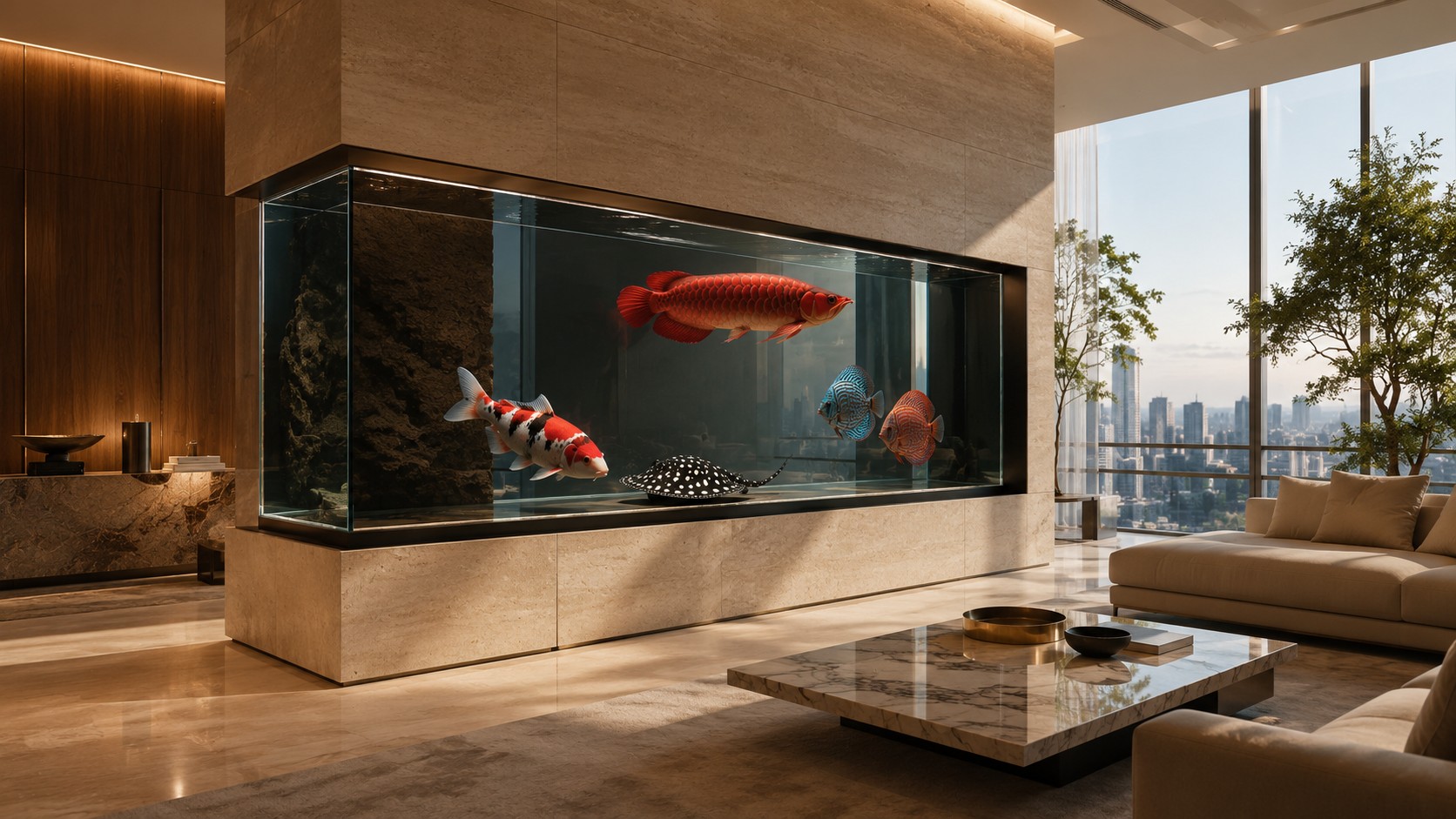
Far removed from the traditional, utilitarian concept of an aquarium, these installations are conceived as living, breathing focal points. When an elite Super Red Arowana glides effortlessly behind a wall of frameless, museum-grade glass, or a collection of grand champion Nishikigoi paints moving shadows across the floor of a sunlit atrium, the space is transformed. It ceases to be merely a room; it becomes a sanctuary of dynamic, living art.
"An exceptional interior should feel alive. A premium ornamental fish collection is not merely decoration—it is living architecture that evolves every day."
2. The Aquarium as Architectural Sculpture
The evolution of the luxury aquascape has mirrored the evolution of modern architecture itself: a relentless pursuit of seamless integration, minimalist purity, and spatial impact. The era of the freestanding, obtrusive fish tank has been replaced by the concept of the aquarium as an integrated architectural volume.
Frameless Glass and Minimalist Purity
Today’s premier installations utilize ultra-clear, low-iron starphire glass, joined by nearly invisible seams. This eradicates the visual boundary between the observer and the aquatic environment, allowing the water to appear as if it is suspended in mid-air—a solid block of liquid light.
Room Dividers and Floating Installations
One of the most striking applications of the architectural aquarium is its use in defining spatial flow. A double-sided, floor-to-ceiling aquatic gallery serves as a mesmerizing room divider, delicately separating a formal dining area from a grand living room without obstructing light or sightlines. The movement of the fish provides a kinetic energy that connects the two spaces, creating a shared focal point.
Built-in Wall Aquariums and Gallery Displays
For a more gallery-like experience, built-in wall aquariums are meticulously engineered to sit perfectly flush with surrounding surfaces. Framed in rich materials, they function as constantly shifting cinematic displays. In subterranean collector lounges or private libraries, these glowing portals provide a profound sense of tranquility and focus, contrasting beautifully with the stillness of the surrounding room.
3. Choosing the Right Species: Matching Persona to Architecture
Just as a curator selects specific artworks to complement a room's aesthetic, a designer must choose aquatic life that harmonizes with the architectural vernacular of the space. Each species of premium ornamental fish carries a distinct visual character and energy.
- Super Red & Crossback Golden Arowana: The undisputed monarchs of the luxury aquarium. With their large, metallic scales and imperious, deliberate swimming style, Arowanas exude power and prosperity. They are perfect for bold, masculine spaces such as executive boardrooms, private offices, or contemporary penthouses featuring dark woods and brushed metals.
- Nishikigoi (Koi): Koi require horizontal space and are best viewed from above, making them the ultimate centerpiece for indoor atriums, luxury villa entryways, or Zen-inspired courtyard water features. Their serene, schooling nature and vibrant colors bring a sense of organic tranquility to minimalist, concrete, or timber-heavy architecture.
- Premium Discus: Known as the "Kings of the Amazon," Discus offer a delicate, highly detailed aesthetic. Their perfectly round profiles and intricate, labyrinthine patterns demand closer inspection. They thrive in lushly planted aquascapes that perfectly complement organic, biophilic interior designs or sun-drenched conservatories.
- Elite Freshwater Stingray (e.g., Black Diamond): Stingrays provide a striking, ultra-modern visual. Their stark black-and-white contrast and hypnotic, undulating movement along the substrate make them a dramatic addition to avant-garde, monochromatic interiors or ultra-modern luxury lounges.
- Champion Ranchu and Luxury Betta: For smaller, highly curated spaces like a boutique hotel reception desk or a refined study, the sculptural, delicate nature of a champion Ranchu goldfish or a solitary, competition-grade Betta offers an intimate encounter with exquisite detail.
4. Materials that Complement Living Art
The success of an architectural aquarium relies heavily on the materials chosen to frame it. The surrounding finishes must not compete with the aquatic display; rather, they should ground the installation, creating a sophisticated dialogue between the organic movement of the water and the permanence of the architecture.
Stone and Earth
Natural stone offers a timeless counterpoint to the fluidity of water. Cladding the surrounding walls or the aquarium base in unfilled travertine, honed limestone, or dramatically veined marble creates a sense of monumental permanence. Textured plaster or tadelakt can provide a softer, more tactile framing that absorbs light beautifully.
Wood and Warmth
To introduce warmth and organic texture, designers frequently employ rich, natural timbers. Smoked oak, deeply grained walnut, or charred Shou Sugi Ban wood can frame the vibrant colors of an Arowana or Discus with spectacular contrast. The organic grain of the wood subtly echoes the natural origins of the aquatic life.
Metals and Fabrics
For a more refined, luxurious edge, subtle metallic accents—such as brushed brass, patinated bronze, or blackened steel—can be used to edge the glass or form the structural supports. Softening the surrounding space with acoustic wall panels enveloped in natural linen ensures that the subtle, soothing sounds of water filtration are enjoyed without harsh echoes.
"An architectural aquarium is a masterclass in balance: the fluid dynamism of water perfectly anchored by the silent permanence of stone, wood, and bronze."
5. Light, Water, and Space: The Alchemy of Atmosphere
In interior design, lighting is everything. When combined with water and movement, lighting becomes a transformative tool that elevates an aquarium from a visual feature to a spatial experience.
Mastering Indirect Illumination
A premium aquatic installation should never look like a brightly lit box in a dark room. The lighting must be sophisticated and layered. Narrow-beam LED spotlights positioned above the water surface can highlight the metallic scales of an Arowana, while gentle, ambient backlighting can create a sense of infinite depth.
The Play of Shadows and Reflections
One of the most magical, often overlooked aspects of a living aquascape is the caustic network of light it casts upon the surrounding environment. As surface agitation catches the light, it projects rippling, kinetic shadows onto the ceilings and walls. This gentle, rhythmic movement acts as a natural, soothing installation art piece that shifts throughout the day.
Natural Daylight and Minimalism
For indoor ponds or atrium installations, harnessing natural daylight is paramount. A skylight positioned directly over a Koi pond allows the fish to experience natural diurnal rhythms while ensuring their colors are viewed in the truest possible spectrum. In these scenarios, maintaining minimalist surroundings ensures that the eye is drawn invariably to the living jewels within the water.
6. Luxury Projects Around the World: Case Studies in Elegance
Across the globe, visionary architects and elite homeowners are integrating premium ornamental fish into their most ambitious projects, redefining the boundaries of luxury living.
- The Private Villa (Bali, Indonesia): In a sprawling, open-air tropical villa, a massive, shallow reflection pool bisects the main living space. Rather than a sterile water feature, it is home to a curated collection of Grand Champion Kohaku and Sanke Koi. The pool blurs the line between indoor and outdoor living, providing a vibrant, living carpet of color that anchors the entire estate.
- The Executive Penthouse (Singapore): Suspended high above the city skyline, a sleek, monolithic black marble wall serves as a room divider between the dining and lounging areas. Inset perfectly flush within this marble is a three-meter, optically clear aquarium housing a solitary, flawless Super Red Arowana. The installation acts as a symbol of prosperity and a mesmerizing focal point against the backdrop of the city lights.
- The Collector’s Lounge (London, UK): In a subterranean private gallery designed to house classic cars and fine art, a massive, dimly lit Amazonian biotope aquarium stretches along an entire wall. Filled with submerged driftwood and elite Discus, it provides a warm, organic contrast to the mechanical perfection of the automobiles, creating an atmosphere of profound exclusivity.
7. The Future of Living Luxury
As the definition of luxury continues to evolve, there is a distinct paradigm shift occurring among the ultra-high-net-worth demographic. True luxury is no longer solely about the accumulation of static possessions; it is about the curation of extraordinary, personalized experiences.
A static sculpture, no matter how valuable, remains unchanged from the day it is purchased. A premium ornamental fish collection, however, is a narrative that unfolds over time. The collector becomes a participant in the art. They witness the subtle deepening of an Arowana's crimson scales, the expanding grace of a Stingray, or the meticulous maturation of a Nishikigoi's pattern over a decade.
This dynamic, interactive relationship provides an emotional resonance that inanimate objects simply cannot replicate. It brings a profound sense of tranquility, a connection to the natural world, and a daily engagement with living excellence.
8. Conclusion: Architecture that Breathes
To design a luxury space around a premium ornamental fish collection is to embrace a philosophy where architecture is not merely a container for life, but a canvas for it. It requires a profound respect for both the aesthetic vision of the space and the biological needs of the living masterpieces within it.
When executed with precision, restraint, and an uncompromising commitment to quality, an architectural aquascape transcends interior design. It becomes the soul of the room—a mesmerizing convergence of light, water, craftsmanship, and ancient bloodlines.
At Gemilang Rejeki Aquatic, we collaborate closely with the world’s leading architects, interior designers, and private collectors. We understand that the fish we provide are not just specimens; they are the vital, beating heart of your most ambitious design projects. By offering only the finest, most meticulously curated bloodlines, we ensure that your living architecture is anchored by nothing less than absolute perfection.
Frequently Asked Questions (FAQ)
Q: Can an architectural aquarium be retrofitted into an existing luxury home?
A: Yes, though it requires meticulous planning regarding structural support, plumbing, and electrical access. We often work with structural engineers and specialized aquatic installers to seamlessly integrate these systems into existing high-end interiors.
Q: Do these large installations require excessive maintenance?
A: Premium architectural aquariums utilize enterprise-grade, automated filtration systems that handle the majority of water quality management. For elite collections, maintenance is typically outsourced to specialized aquatic concierges who ensure the environment remains flawless without impacting the homeowner's lifestyle.
Q: How do designers handle the noise of filtration systems in quiet, luxurious spaces?
A: In world-class installations, the life-support systems (pumps, chillers, filters) are almost never located in the same room as the display. They are housed in acoustically insulated remote filtration rooms, ensuring the viewing experience is perfectly silent.